What Is Cranial Osteopathy for Babies?
posted 9th July 2026
A whole-body approach to treating babies
When parents contact me, one of the first questions they ask is: "Do you use cranial osteopathy?"
The answer is yes—but perhaps not in the way many people expect.
Cranial osteopathy is a wonderfully gentle technique and can be an important part of treatment for babies. However, it is just that: a technique. It is one of many tools I may use to help your baby feel more comfortable. My approach is to treat the baby as a whole.
Rather than focusing on one area of the body, I look at how your baby moves, feeds, settles and responds as a whole person. Every baby is unique, and every treatment is tailored to their individual needs.
What Is Cranial Osteopathy?
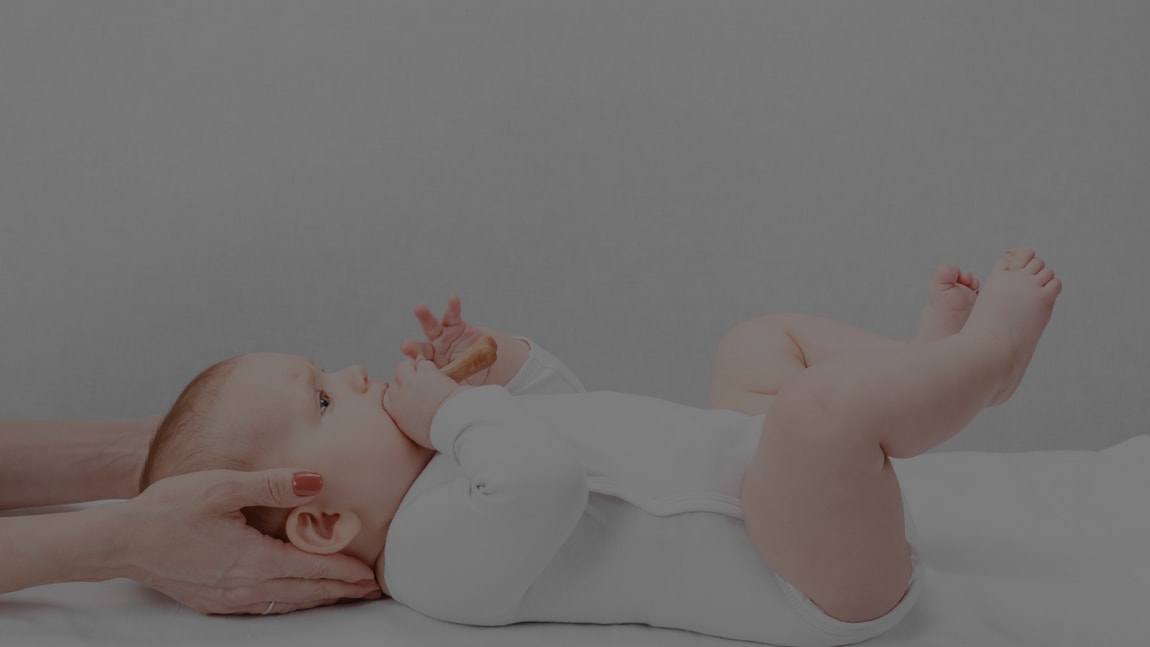
Cranial osteopathy is a very gentle form of osteopathic treatment that uses light touch to assess and treat areas of tension and restriction throughout the body, including the head. Although the name suggests it focuses only on the skull, cranial osteopathy is actually based on treating the body as an interconnected system.
When treating babies, the techniques are incredibly gentle and always adapted to your baby's comfort. Many babies sleep peacefully during treatment, while others simply relax in their parent's arms.
What Is Craniosacral Therapy?
Another term you may come across when looking for treatment for your baby is craniosacral therapy. Although cranial osteopathy and craniosacral therapy share some similarities—both use gentle, hands-on techniques—they are different professions with different training pathways.
Cranial osteopathy is practised by qualified, registered osteopaths who have completed a four-year Master's degree (or equivalent) in osteopathy and are regulated by the General Osteopathic Council (GOsC). Many osteopaths then undertake additional postgraduate training in cranial osteopathy.
As registered healthcare professionals, osteopaths are trained to assess the whole body, considering how muscles, joints, posture, movement and development may be contributing to a baby's comfort and function. Cranial techniques are then used as one part of a wider osteopathic assessment and treatment plan.
Craniosacral therapy is a separate therapy that also uses gentle touch with the aim of supporting relaxation and the body's natural ability to adapt. Practitioners complete their own specialist training, but they are *not osteopaths unless they have also qualified and registered as one.
Whichever approach you choose, it's important to ensure your practitioner has appropriate training, is experienced in treating babies, and takes the time to carry out a thorough assessment before beginning treatment.
In my practice, I use cranial osteopathy as one of several gentle osteopathic techniques. My focus is always on treating your baby as a whole—not just one part of their body—to help them move, feed and feel as comfortably as possible.
What Does Cranial Osteopathy Do?
The aim of cranial osteopathy is to help reduce areas of tension and encourage comfortable movement throughout the body. Rather than focusing solely on the head, I assess how your baby's whole body is moving and functioning.
In my practice, cranial osteopathy is one of several techniques I use. While it can be an excellent tool, I don't believe it should be used in isolation. Gentle treatment to the neck, spine, shoulders, diaphragm and pelvis can be just as important, particularly for babies who seem unsettled, have a preferred head position or are experiencing feeding challenges.
Some babies benefit from more cranial treatment, while others respond well to gentle spinal and whole-body osteopathic techniques. More often than not, it's a combination of both.
Treating the baby as a whole, not just the cranium
Babies don't exist as just a head, a neck or a feeding issue. Their bodies work as one connected system, and tension can develop anywhere.
During your baby's appointment, I assess how they move, how they lie, how they turn their head and where there may be areas of tightness or restriction. My aim is to help their body move as comfortably and freely as possible using gentle, age-appropriate osteopathic treatment.
Many parents tell me their baby seems calmer and more relaxed following treatment. I often compare it to how we as adults feel after receiving a gentle massage. When our bodies are carrying less tension, we often feel more comfortable—and babies are no different.
Osteopathy for Feeding Difficulties
If your baby is experiencing feeding difficulties, I also take a whole-body approach.
Feeding isn't just about the mouth. The position of the neck, jaw, shoulders and tongue, together with your baby's overall comfort and movement, can all influence how easily they feed.
Where appropriate, I may gently assess and treat the muscles around the jaw and mouth alongside the rest of the body, always working within your baby's comfort and tolerance.
It's important to remember that feeding challenges can have many different causes. Osteopathic treatment forms one part of a baby's overall care and, where needed, I encourage parents to work alongside their midwife, health visitor, GP or lactation consultant.
Supporting Parents Is Just as Important
One part of treatment that I believe is often overlooked is supporting parents.
Breastfeeding in particular can become incredibly stressful when things aren't going to plan. While treatment may help reduce areas of tension that could be contributing to feeding difficulties, I never want feeding to become a source of guilt or pressure.
I often encourage parents to try the techniques we've discussed between appointments. If your baby latches more comfortably, that's wonderful. If they don't, that's okay too.
Progress isn't always linear, and one difficult feed doesn't mean you've failed.
The most important thing is that feeding doesn't become a stressful experience for either you or your baby. Babies are incredibly sensitive to the emotional environment around them, and creating a calm, supportive atmosphere is often just as important as any hands-on treatment.
Every Baby Is Different
There is no "one-size-fits-all" approach to treating babies.
Some babies benefit from more cranial osteopathy, others from gentle spinal treatment, and many benefit from a combination of both. My aim is never to focus on one particular technique, but to understand what your baby needs on that day and provide the gentlest, most appropriate treatment possible.
Every appointment includes a full case history, an assessment and treatment that is tailored specifically to your baby's presentation.
Could Your Baby Benefit from Gentle Osteopathic Treatment?
If your baby seems unsettled, uncomfortable, has a preferred head position, is finding feeding difficult, or you simply feel they could benefit from some gentle hands-on treatment to help them feel more relaxed and comfortable, osteopathy may be worth considering.
If you'd like to find out more or book an appointment, I'd be delighted to welcome you to the clinic.
Book an initial baby osteopathy appointment at Osteopathy West London and let's work together to support your baby's comfort, movement and wellbeing from the very beginning.