Scoliosis in Children: What Parents need to know
posted 10th June 2026
It can be worrying to notice that your child's shoulders appear uneven, one shoulder blade sticks out more than the other, or their posture simply doesn't look quite right. In many cases, these changes are harmless, but sometimes they may be a sign of scoliosis.
At Osteopathy West London, we offer assessment and support for babies, children and teenagers, helping parents understand what is normal, what may need monitoring, and when further investigation may be appropriate.
What Is Scoliosis?
Scoliosis is a sideways curvature of the spine that is often accompanied by a degree of spinal rotation.
While a healthy spine naturally curves when viewed from the side, scoliosis creates a curve when viewed from behind.
Scoliosis can vary significantly from child to child. Some curves are mild and remain stable throughout growth, while others may progress during periods of rapid development.
What Causes Scoliosis?
The most common type is adolescent idiopathic scoliosis, which typically develops between the ages of 10 and 18.
The term idiopathic simply means that there is no identifiable cause.
Other less common types include:
Congenital scoliosis, where the spine develops differently before birth.
Neuromuscular scoliosis, associated with certain neurological or muscular conditions.
Functional scoliosis, which may develop due to factors such as leg length differences or muscle imbalance.
Importantly, scoliosis is not caused by poor posture, carrying a heavy school bag or spending too much time on screens.
Signs Parents May Notice
Many children with scoliosis have no pain at all, particularly in the early stages.
Parents may notice:
- Uneven shoulders.
- One shoulder blade appearing more prominent.
- Uneven waist creases.
- Clothing hanging unevenly.
- One hip appearing higher than the other.
- A visible curve in the spine.
- A rib prominence when bending forwards.
Sometimes a child may also complain of back pain, postural fatigue or discomfort during periods of growth.
When Should You Seek Advice?
It is worth arranging an assessment if you notice:
- A visible change in posture.
- Uneven shoulders or hips.
- Persistent back pain.
- Concerns raised by a teacher, sports coach or healthcare professional.
- A family history of scoliosis.
Early assessment can provide reassurance and help identify whether monitoring or referral may be appropriate.
How We Assess Scoliosis
At Osteopathy West London, we take a thorough and child-friendly approach.
Your child's assessment may include:
- A detailed medical and developmental history.
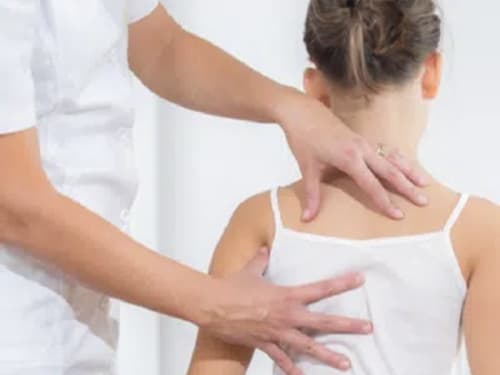
- Postural assessment.
- Spinal movement testing.
- Screening for scoliosis using recognised clinical tests.
- Assessment of balance, coordination and movement patterns.
- Evaluation of muscle strength and flexibility.
- Screening for hypermobility where appropriate.
If we feel further investigation is required, we can advise on the next steps and liaise with your GP regarding imaging or specialist referral where appropriate.
How Osteopathy Can Help
While osteopathy cannot straighten a structural scoliosis, it can play an important role in supporting children and adolescents experiencing associated symptoms.
Treatment may help with:
- Back pain.
- Muscular tension.
- Postural fatigue.
- Reduced mobility.
- Movement confidence.
- Physical comfort during growth and development.
Our aim is to help children move comfortably, remain active and build confidence in their bodies.
Treatment is always tailored to the individual and may include gentle hands-on techniques, movement advice and exercises designed to support strength, mobility and overall function.
Paediatric Osteopathy at Osteopathy West London
Our paediatric osteopathy service is designed to support babies, children and teenagers through the many physical changes that occur during growth and development.
Children may attend for concerns including:
- Scoliosis.
- Back and neck pain.
- Growing pains.
- Sports injuries.
- Postural concerns.
- Hypermobility.
- Joint pain.
- Movement and mobility concerns.
Every child is assessed individually, and where treatment is not appropriate, we will always advise on the most suitable course of action.
When to Seek Urgent Medical Advice
While most cases of back pain and scoliosis are not serious, you should seek medical advice promptly if your child experiences:
- Severe or worsening pain.
- Pain that regularly wakes them at night.
- Weakness in the arms or legs.
- Numbness or tingling.
- Changes in bladder or bowel function.
- Unexplained weight loss or illness.
Book a Paediatric Osteopathy Assessment here.
If you are concerned about your child's posture, spinal development or back pain, we are here to help.
Our paediatric osteopathy assessments provide a thorough evaluation, clear explanation of findings and personalised advice to help your child stay active, confident and healthy as they grow.
Author & Medical Disclaimer
Hannah Whitcombe M.Ost
Registered Osteopath and Nutritionist
This article is intended for educational purposes only and should not be used as a substitute for individual medical advice, diagnosis or treatment. If you have concerns about your child's health, please consult an appropriate healthcare professional.
References: NHS, UK Scoliosis Association, British Scoliosis Society.